Ask Real Estate - Orange County Starter Homes: Why the Monthly Cost Matters More Than the Purchase Price (2026)
Orange County Starter Homes: Why the Monthly Cost Matters More Than the Purchase Price (2026)
Two Homes. Same Price. Very Different Reality.
Email: myhome@zengrealestate.com
Updated June 2026
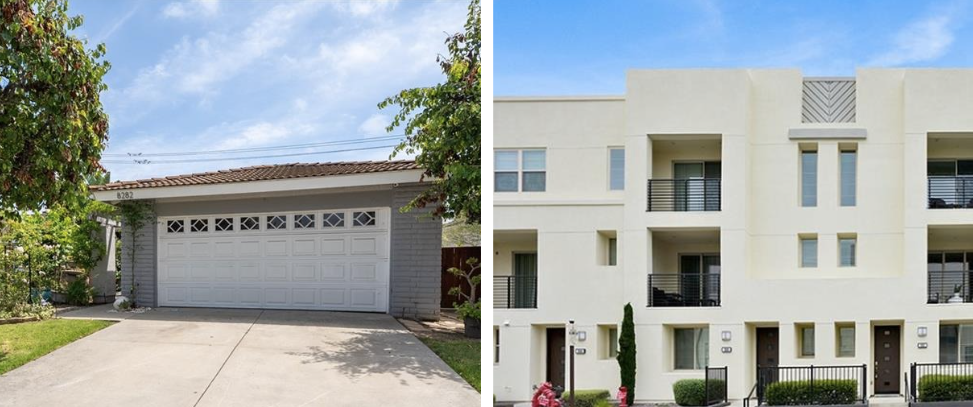
A few months ago, I was helping a buyer compare two homes in Orange County.
Both were listed around the same price.
Both had similar square footage.
Both looked move-in ready in the photos.
At first glance, the decision seemed straightforward. We toured the homes, discussed the neighborhoods, and reviewed the disclosures. The buyers naturally focused on the purchase price because that's what most people do.
Then we started looking at the monthly ownership costs.
One home had a relatively low HOA and no Mello-Roos.
The other had a higher HOA, a substantial Mello-Roos assessment, and insurance costs that were likely to increase over time.
When we added everything together, the difference wasn't $50 or $100 per month.
It was several hundred dollars every month.
Over five years, that difference could easily add up to tens of thousands of dollars.
The buyers were surprised.
The homes looked similar.
The list prices were similar.
But the true cost of ownership was not.
This happens far more often than most buyers realize.
In Orange County, especially for first-time buyers and move-up buyers working within a specific budget, focusing only on the purchase price can lead to expensive surprises.
The monthly payment is what determines your lifestyle.
The monthly payment is what affects your ability to save, invest, travel, or handle unexpected expenses.
And the monthly payment is influenced by much more than the mortgage.
Let's look at some of the hidden factors that often make two similarly priced homes feel dramatically different after closing.

The Purchase Price Is Only One Number
When buyers search online, they usually sort by price.
It's understandable.
Price is visible and easy to compare.
What is harder to see are the expenses that continue month after month after month.
Those include:
Property taxes
Mello-Roos assessments
HOA dues
Homeowners insurance
Utility costs
Maintenance expenses
Special assessments
Commute-related costs
Each one may seem small individually.
Combined, they can significantly affect affordability.
This is why I often tell buyers:
The goal isn't to buy the most expensive home you can qualify for. The goal is to buy the home that best supports your long-term financial and lifestyle goals.
Hidden Cost #1: Mello-Roos
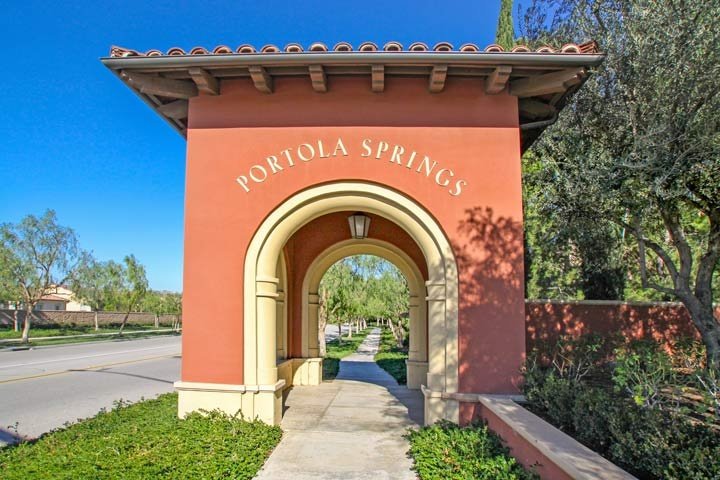
Many newer Orange County communities have Mello-Roos.
Mello-Roos is not inherently bad.
In many cases, it helped fund schools, roads, parks, community facilities, and infrastructure that residents enjoy today.
The issue is not whether Mello-Roos is good or bad.
The issue is whether buyers account for it properly.
Some communities have little or no Mello-Roos.
Others can add several hundred dollars per month to ownership costs.
Two homes may appear nearly identical online.
Yet one may carry substantially higher annual tax obligations because of these assessments.
For first-time buyers already stretching their budget, this can make a meaningful difference.
When comparing properties, always ask:
How much is the annual Mello-Roos?
How many years remain?
Is it fixed or variable?
How does it affect the total monthly payment?
These questions matter far more than many buyers realize.
Hidden Cost #2: HOA Fees
HOAs are another major factor.
Again, HOA fees are not automatically negative.
In some communities, HOA dues cover amenities that residents genuinely value:
Pools
Parks
Clubhouses
Sports facilities
Gated access
Landscape maintenance
Exterior maintenance
The key question is whether the value received aligns with your lifestyle.
Imagine two buyers.
Buyer A uses the pool, fitness center, parks, and community events every week.
Buyer B rarely uses any of them.
The same HOA fee represents very different value to each person.
Some buyers also underestimate how much HOA costs vary between communities.
A difference of $250 per month may not sound dramatic initially.
Over ten years, however, that represents roughly $30,000 before considering future increases.
The right question is not:
"How much is the HOA?"
The better question is:
"What am I receiving in exchange for the HOA fee, and is that valuable to me?"

Hidden Cost #3: Insurance Is Becoming More Important
Insurance has become a much bigger discussion in recent years.
Historically, many buyers paid little attention to insurance during the home search process.
Today, that approach can be risky.
Factors that can influence insurance costs include:
Fire risk
Topography
Proximity to open space
Age of the property
Roof condition
Construction type
Claims history
Some hillside and open-space communities offer beautiful views and exceptional privacy.
They may also carry different insurance considerations than homes in flatter, denser urban environments.
This doesn't mean buyers should avoid those communities.
It simply means they should understand the financial implications before making a decision.
A beautiful home should still fit comfortably within the overall budget.
Hidden Cost #4: Utility Expenses
Utility costs are rarely highlighted in listing descriptions.
Yet they can vary significantly.
Newer homes often offer advantages such as:
Better insulation
Dual-pane windows
More efficient HVAC systems
Solar systems
Improved building standards
Older homes may offer:
Larger lots
More interior space
Established neighborhoods
Lower tax burdens
Neither is automatically better. I explored some of these trade-offs in Newer vs. Established Irvine Neighborhoods (2026 Guide).
They simply present different trade-offs.
For some buyers, the monthly utility savings from a newer home are meaningful.
For others, the additional living space and lower acquisition cost of an older home may be more attractive.
Understanding the full picture is essential.
Hidden Cost #5: Maintenance and Repairs
One of the most overlooked expenses in homeownership is future maintenance.
A home can look beautiful during a showing and still require significant expenditures over time.
Important items include:
Roof replacement
HVAC systems
Water heaters
Plumbing
Electrical systems
Exterior paint
Windows
Landscaping
A lower-priced home may require substantial investment after closing.
A higher-priced home may have already addressed many of these issues.
This is why buyers should evaluate both:
Current affordability.
Future capital expenses.
A home is not just an asset.
It is also a physical structure that requires ongoing maintenance.

Hidden Cost #6: The Cost of the Commute
Many buyers focus on the property itself and underestimate the impact of location.
The commute affects:
Fuel costs
Vehicle wear and tear
Time
Family schedules
Stress levels
A home that saves thirty minutes each way may effectively return hundreds of hours per year to a household.
That value doesn't appear on a mortgage statement.
Yet it affects quality of life every single day.
This is why I encourage buyers to think beyond the home itself.
The surrounding ecosystem matters.
Employment centers.
Freeway access.
Shopping.
Schools.
Daily convenience.
All of these influence long-term satisfaction.
Why Orange County Functions as Multiple Housing Markets
One reason these differences become so significant is that Orange County does not operate as a single housing market, as we discussed in Why Irvine Behaves Like Several Housing Markets—Not One.
Instead, it behaves more like a collection of interconnected micro-markets.
A buyer considering:
Irvine
Anaheim
Orange
Tustin
Lake Forest
Mission Viejo
Anaheim Hills
Huntington Beach
is not simply comparing homes.
They are comparing entirely different ecosystems.
Each area offers a different balance of:
Housing age
Tax structure
HOA costs
Commute patterns
School districts
Amenities
Lifestyle preferences
This is why broad market headlines often fail to help individual buyers.
The question is not:
"Is the Orange County market good?"
The question is:
"Which Orange County market best fits my goals?"
The Most Expensive Mistake Buyers Make
Many buyers begin with one question:
"What is the maximum amount I can qualify for?"
I believe a better question is:
"What monthly ownership cost allows me to live comfortably while still achieving my financial goals?"
Those are very different questions.
Qualifying for a payment does not necessarily mean enjoying that payment.
Homeownership should create stability.
It should not create constant financial pressure.
The right home leaves room for:
Savings
Investments
Vacations
Children's activities
Unexpected repairs
Life's inevitable surprises
Buying at the edge of affordability often limits flexibility later.
A Better Framework for Evaluating Starter Homes
When comparing properties, I encourage buyers to evaluate the following categories:
1. Purchase Price
The starting point, not the final answer.
2. Total Monthly Cost
Mortgage, taxes, HOA, insurance, and assessments.
3. Lifestyle Fit
Commute, neighborhood, amenities, schools, and convenience.
4. Future Maintenance
Expected repair and replacement costs.
5. Resale Potential
How future buyers may perceive the property.
6. Long-Term Flexibility
Will the home still fit your needs in five years?
Buyers frequently ask where they should begin their search. My article Which Orange County City Fits Different Buyers? provides a framework for comparing different areas based on lifestyle and budget priorities.A balanced evaluation often leads to better decisions than focusing on price alone.
Final Thoughts
The best starter home is not necessarily the cheapest home.
Nor is it the newest.
Nor is it the largest.
The best starter home is the one that balances affordability, lifestyle, future flexibility, and long-term value.
In Orange County, two homes with similar purchase prices can create very different ownership experiences.
That's why understanding the hidden layers behind the listing price matters.
HOA fees.
Mello-Roos.
Insurance.
Maintenance.
Utilities.
Location.
These factors often have a greater impact on daily life than buyers initially expect.
If you're evaluating starter homes in Orange County, I encourage you to look beyond the listing price and understand the complete ownership picture before making a decision.
Because when it comes to real estate, the goal isn't just to buy a home.
It's to buy the right home for the life you want to build.
Watch the Related Video
In my latest YouTube video, I compare eight real starter homes across four Orange County markets and examine the hidden trade-offs that affect affordability, lifestyle, and long-term value.
Watch here:
Need Help Evaluating Orange County Homes?
Every property comes with its own set of advantages, compromises, and ownership costs. If you're comparing neighborhoods or trying to determine which home best fits your budget and goals, feel free to reach out.
Know the home. Elevate the value.
Phone: (714) 902-3135
Email: myhome@zengrealestate.com