Ask Real Estate - Why Irvine Behaves Like Several Housing Markets—Not One
Why Irvine Behaves Like Several Housing Markets—Not One
Email: myhome@zengrealestate.com
Understanding the Micro-Markets Inside One of Orange County’s Most Discussed Cities
On paper, it’s easy to talk about “the Irvine market” as if it were a single thing.
Median price.
Average days on market.
Inventory levels.
These numbers are useful—but they can also be misleading.
Two homes can come on the market the same week in Irvine, priced similarly, with comparable square footage, and have completely different outcomes. One might receive multiple offers within days. Another may sit quietly while buyers take their time.
The difference is rarely luck.
More often, it’s because Irvine does not function as a single housing market. Instead, it behaves more like a collection of micro-markets—distinct neighborhoods, price ranges, and buyer motivations that move at different speeds.
Understanding those micro-markets can make the difference between interpreting the market accurately and drawing the wrong conclusions from citywide statistics.
Why “The Irvine Market” Is an Oversimplification
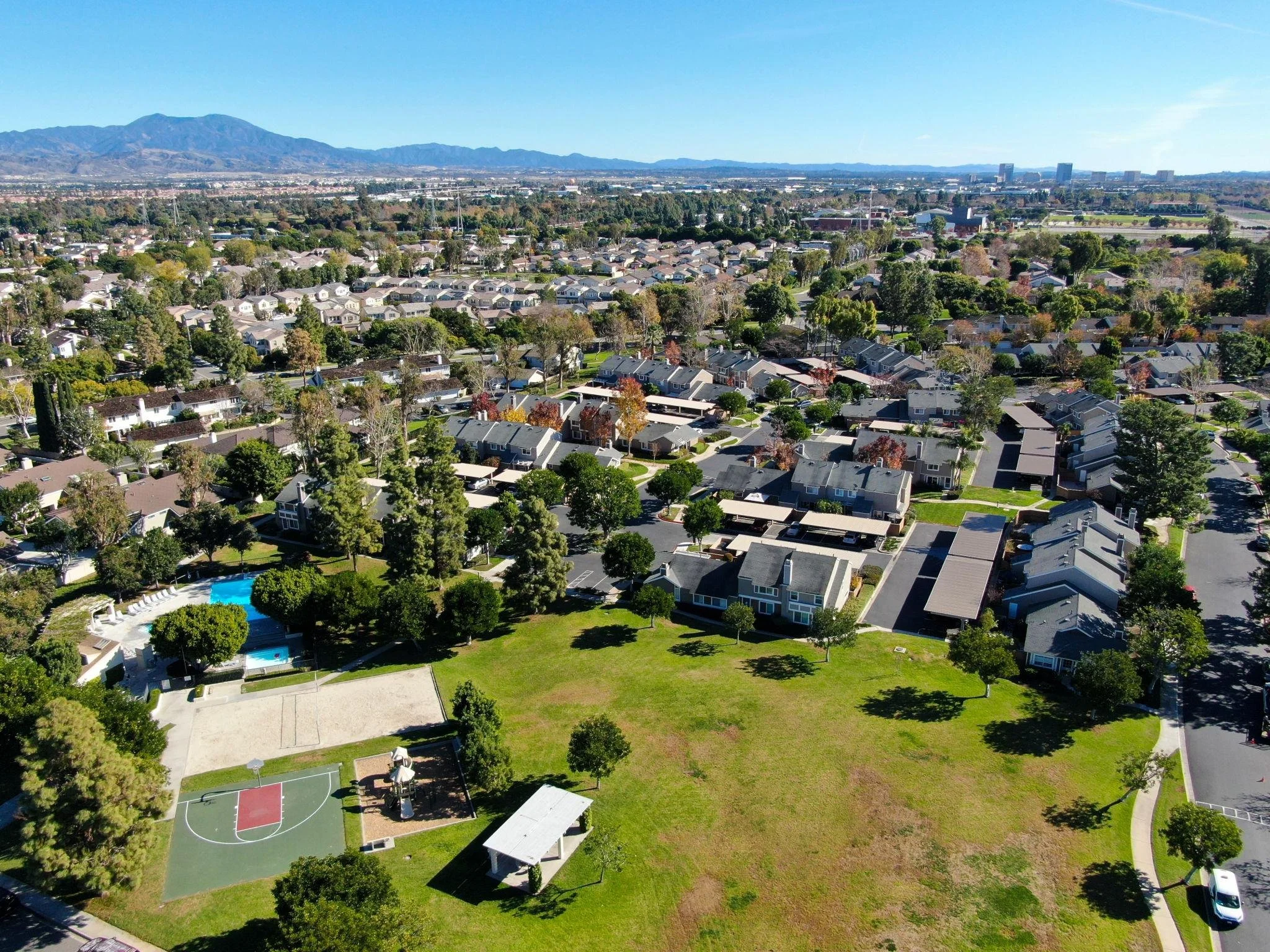
Cities that develop organically over long periods sometimes blend into a single housing pattern. Irvine is different. It is a master-planned city, but that planning occurred in phases across decades, producing neighborhoods with distinct characteristics.
Within Irvine, you’ll find:
Homes built in the 1970s and 1980s alongside brand-new construction
Communities with large mature trees and winding streets, and others designed with modern density in mind
Areas where turnover is frequent, and others where owners stay for decades
Price points ranging from entry-level condos to multimillion-dollar estates
When analysts quote an “Irvine median price,” they’re compressing all of those realities into a single number.
That number is useful for macro context. But it tells you very little about how buyers and sellers are behaving in any specific neighborhood.
To see what’s really happening, you have to break the city into smaller pieces.
Housing Age and Development Patterns
One of the most important dividing lines in Irvine is the difference between newer master-planned communities and more established neighborhoods.
Newer Communities
Areas such as Portola Springs, Orchard Hills, and the Great Park neighborhoods represent Irvine’s more recent phases of development.
These communities often share several traits:
Consistent architectural styles
HOA-governed amenities
Mello-Roos assessments
Higher density planning compared with older Irvine areas
Because many homes were built within a similar timeframe, inventory in these communities can move somewhat in sync. When multiple comparable homes appear at once, buyers gain clearer reference points, and pricing adjustments can happen relatively quickly.
Newer communities can also attract a high percentage of relocation buyers—people who may be comparing Irvine not just with neighboring cities but with entirely different regions.
That combination means these areas sometimes respond more quickly to changes in interest rates, inventory levels, or buyer sentiment.
Established Neighborhoods
Older Irvine neighborhoods—such as Northwood, Turtle Rock, or University Park—tend to behave differently.
These communities often feature:
More varied architecture
Mature landscaping
Larger or more irregular lot configurations
Long-term homeowners who move less frequently
Because turnover is lower, supply changes tend to be gradual. Buyers interested in these neighborhoods are often specifically targeting them, rather than broadly shopping across Irvine.
As a result, these areas may appear steadier in periods when other parts of the market feel more dynamic.
This doesn’t mean prices never adjust. But the pace and visibility of those adjustments can differ significantly.

The Influence of School Boundaries
Another factor that shapes Irvine’s micro-markets is school assignment.
For many households, school districts or attendance zones play a central role in deciding where to buy. That focus can concentrate demand in specific neighborhoods at certain times of year.
In practice, this means:
Some neighborhoods see increased activity before the school year begins
Others attract buyers who are less sensitive to timing but highly committed to a particular boundary
Demand stability can vary depending on how closely buyers associate an area with school access
When looking at Irvine from afar, these patterns are easy to miss. But at the neighborhood level, they can strongly influence how quickly homes sell and how competitive buyers become.
Price Segments React Differently
Another reason Irvine behaves like several markets is that buyer sensitivity varies across price ranges.
Entry-Level Homes
Condos and smaller townhomes often attract first-time buyers or buyers moving up from renting.
This segment tends to be more sensitive to interest rate changes, because financing costs affect monthly payments directly. When rates move, activity in this segment can shift quickly.
At the same time, the buyer pool is large, which can keep demand resilient.
Move-Up Buyers
The middle of the market often involves households selling one home to buy another.
These buyers are influenced by two markets at once: the home they’re purchasing and the home they’re selling. Changes in either direction can alter their timing.
Because of that, this segment sometimes moves more cautiously when uncertainty increases.
Luxury Properties
Higher-priced homes typically involve a smaller buyer pool and a longer decision timeline.
These buyers are often less sensitive to mortgage rates but may be more influenced by broader economic confidence, business conditions, or personal financial planning.
As a result, the luxury segment can feel disconnected from the behavior seen in entry-level properties.
How the Same News Produces Different Reactions
Headlines about the housing market often assume uniform reactions.
For example, an interest rate increase might be described as cooling demand. In reality, the impact can vary widely inside a single city.
In Irvine:
Entry-level buyers may pause quickly when borrowing costs change
Some move-up buyers may delay until they sell their current home
Certain luxury buyers may continue unaffected if the purchase is not heavily dependent on financing
Similarly, an increase in listings might shift conditions in a newer community where homes are similar, while having little effect in an older neighborhood with limited supply.
Understanding these distinctions helps explain why broad statements about “the Irvine market” can feel inconsistent with what buyers and sellers experience locally.
What This Means for Buyers
For buyers trying to interpret the market, the most useful shift is moving from citywide thinking to micro-market awareness.
Instead of asking:
“Is Irvine slowing down?”
A more helpful question is:
What is happening in the neighborhood I’m considering?
How are similar homes performing?
Are comparable listings selling quickly, or accumulating?
Tracking a small set of relevant properties often reveals patterns far more clearly than reading general market reports.
This approach is particularly useful for buyers who are currently in a wait-and-see mode.
When you focus on the exact segment you plan to enter, the market becomes easier to understand.
What This Means for Sellers
Sellers face a similar challenge.
Pricing a home based on citywide statistics can be risky, because those statistics may reflect segments very different from your own property.
A home in a newer master-planned community may be competing directly with multiple similar listings. A home in a long-established neighborhood may have far fewer direct comparisons.
Understanding that context helps sellers position their homes realistically and respond more effectively to buyer feedback.
In many cases, success depends less on broad market direction and more on how accurately a home is positioned within its micro-market.
How to Identify Your Micro-Market
Whether you are buying or selling, identifying your micro-market can be done with a few practical steps:
Define the specific neighborhood or cluster of streets you are focused on
Narrow the price range to homes similar to your target property
Track a small group of comparable listings over several weeks
Observe patterns in timing, pricing adjustments, and buyer interest
This kind of focused observation reveals far more about the market than citywide averages alone.
Seeing Irvine More Clearly
Cities often get summarized into single narratives: hot, cold, rising, slowing.
But Irvine resists simple labels.
Its neighborhoods developed across different eras, attract different buyers, and respond differently to the same economic signals. When those variations are compressed into one statistic, the result can obscure more than it reveals.
Looking at Irvine as a set of micro-markets brings the picture into sharper focus. It explains why some homes sell immediately while others take time, why some neighborhoods feel steady while others adjust more visibly, and why headlines rarely tell the whole story.
For buyers and sellers alike, understanding these smaller dynamics can lead to more confident decisions—and a clearer sense of how the market around them is actually moving.
Phone: (714) 902-3135
Email: myhome@zengrealestate.com