Ask Real Estate - Why Newer Isn't Always Better: The Hidden Advantages of Established Areas in Master-Planned Communities
Why Newer Isn't Always Better: The Hidden Advantages of Established Areas in Master-Planned Communities
The Newest Home Isn't Always the Smartest Choice
Email: myhome@zengrealestate.com
Updated June 2026
Whenever I tour buyers through Portola Springs, I notice a common pattern.
Many people instinctively look uphill.
The newest phases are often located higher in the community. The homes are newer. The streets are newer. The models showcase the latest design trends. It's easy to assume that's where the best value must be.
After all, newer is better... right?
Not necessarily.
Recently, I filmed a walkthrough of a former builder model home in one of Portola Springs' lower-elevation neighborhoods. On paper, the property didn't seem like the obvious choice for someone seeking a premium Irvine lifestyle.
The home offered approximately 1,734 square feet, 3 bedrooms, 2.5 bathrooms, solar panels, a built-in BBQ, a fountain feature, and an unusually private backyard with no rear neighbors. It later leased for $5,500 per month.
But what interested me wasn't the home itself.
It was what the home revealed about how people evaluate real estate.
In the video, I deliberately avoided the typical room-by-room home tour.
Instead, I focused on what I call geographic arbitrage—the idea that two homes within the same master-planned community can deliver very similar lifestyles while carrying dramatically different costs, trade-offs, and advantages.
The lesson extends far beyond Portola Springs.
It applies to many Irvine neighborhoods and, frankly, many master-planned communities throughout Southern California.
Why Buyers and Tenants Naturally Gravitate Toward the Newest Phase
Human beings are wired to associate newness with value.
A brand-new car feels more desirable than a three-year-old car.
A newly renovated kitchen feels more exciting than one completed five years ago.
The same psychology appears in real estate.
When buyers visit a master-planned community, they often assume the newest phase must represent the best opportunity.
The reasoning seems logical.
New homes may offer:
Current design trends
Updated finishes
New appliances
Contemporary floor plans
The latest building standards
These are all legitimate benefits.
However, the problem arises when newness becomes the only factor being evaluated.
Because while newer homes may offer certain advantages, they can also introduce trade-offs that buyers rarely consider until after moving in.
That's where lifestyle efficiency becomes important.
Looking Beyond the House
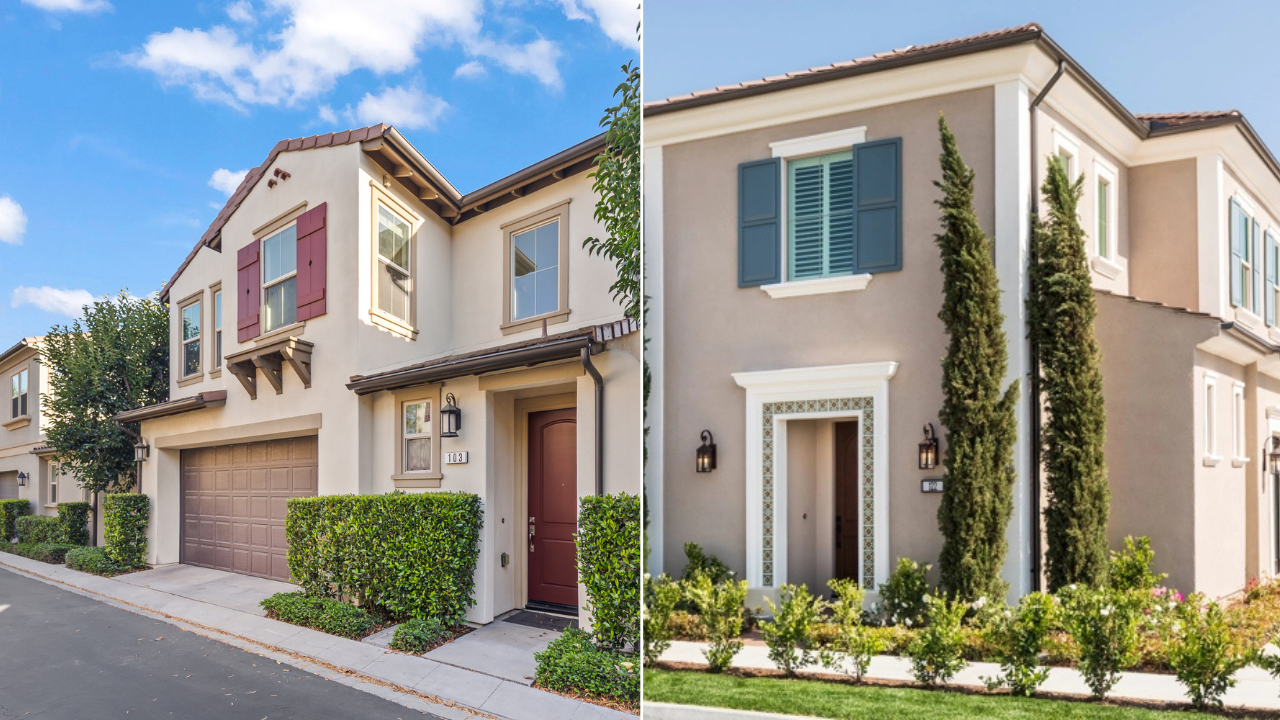
One of the ideas I discussed in the video is that many people evaluate a property as an isolated object.
They focus on:
The kitchen
The bathrooms
The flooring
The countertop materials
The fixtures
Those details matter.
But a home is not simply a collection of finishes.
A home exists within an ecosystem.
The neighborhood.
The community.
The traffic patterns.
The shopping centers.
The schools.
The commute.
The daily routines.
Sometimes the biggest determinants of happiness have nothing to do with the home itself.
Instead, they come from how efficiently the property fits into everyday life.
What Is Geographic Arbitrage?
When most people hear the term "arbitrage," they think about investing.
The principle is simple:
Identify situations where perceived value and actual value don't perfectly align.
I believe a similar concept exists within many master-planned communities.
In Portola Springs, for example, newer phases often command attention because they're new.
Yet some earlier phases may provide many of the same lifestyle benefits while offering unique advantages of their own.
In other words:
The market's attention may be concentrated in one area, while opportunities exist elsewhere.
That's what I mean by geographic arbitrage.
It's not necessarily about spending less money.
It's about maximizing value relative to your goals.
The Surprising Advantage of Lower-Elevation Neighborhoods
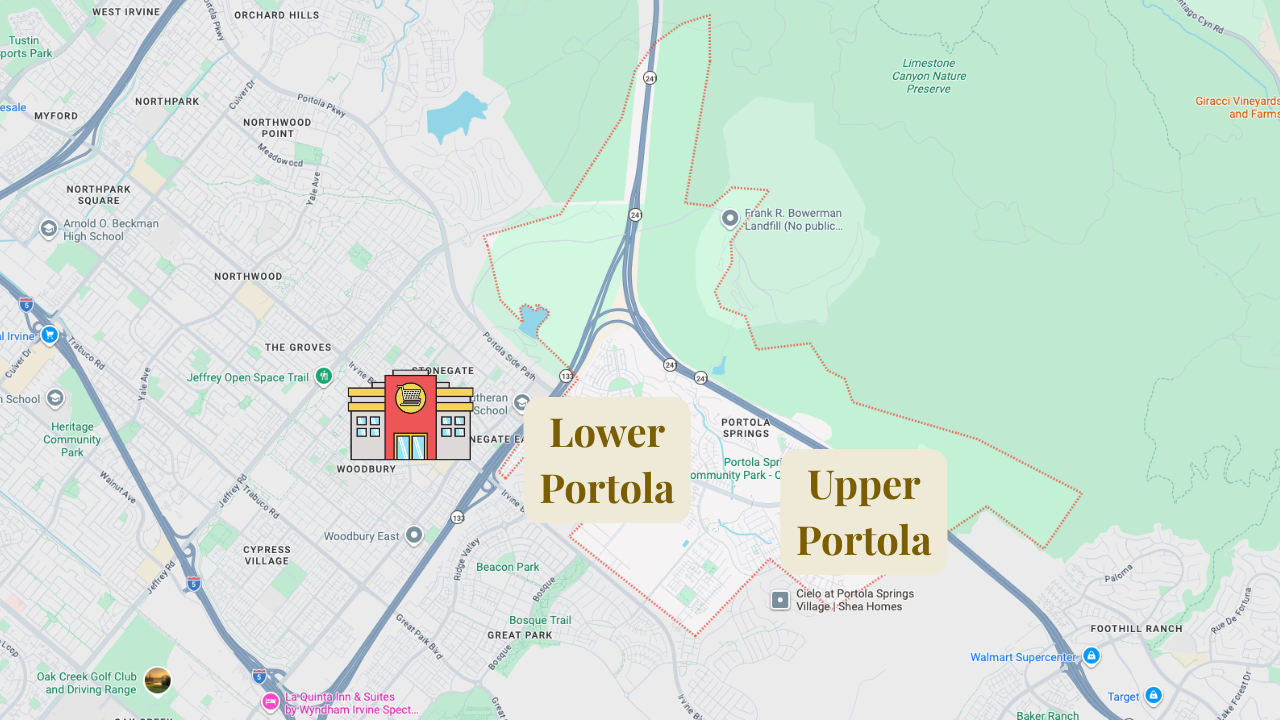
One observation from the video involves location within Portola Springs itself.
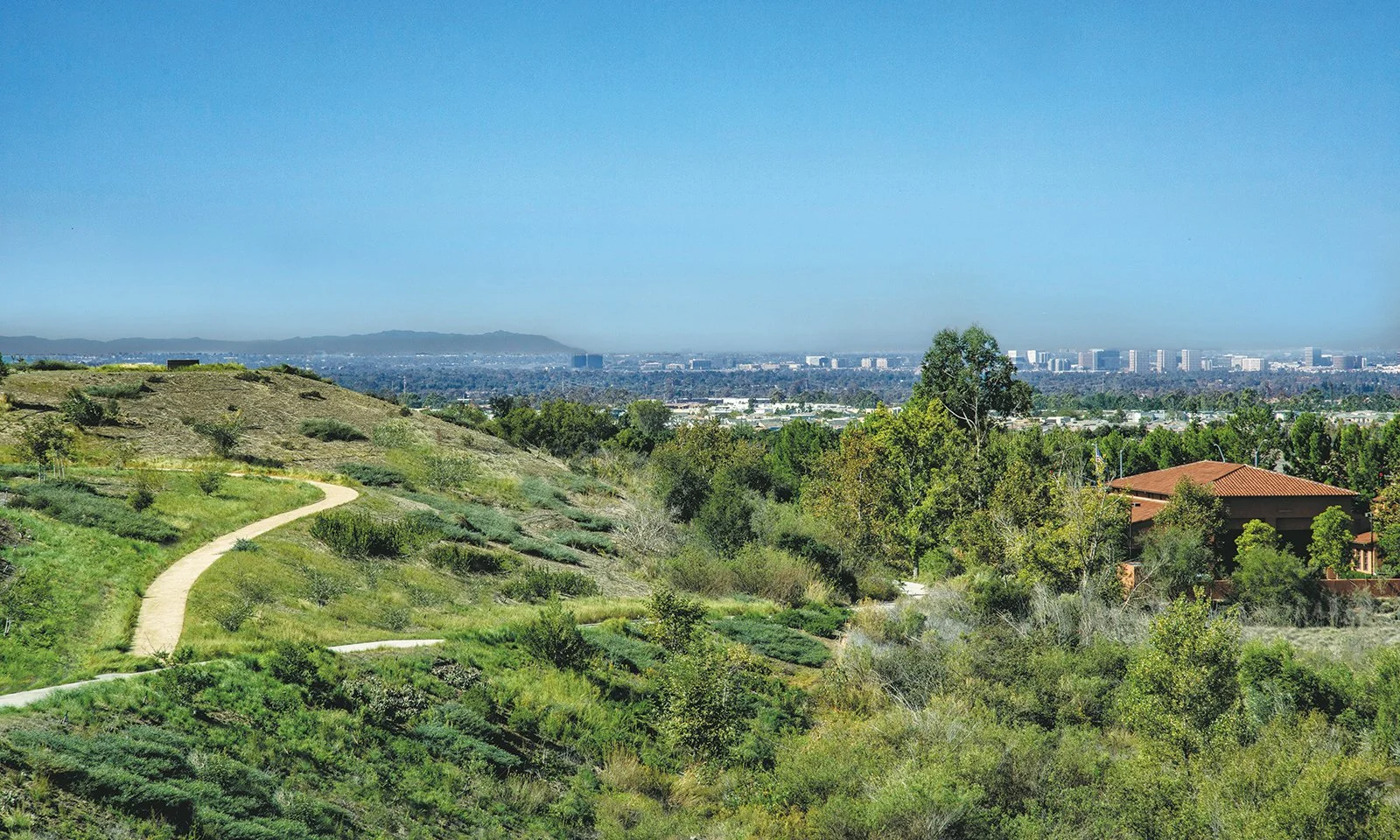
Many buyers focus on hillside locations because they associate elevation with prestige.
There is certainly appeal in hillside living.
Views can be spectacular.
The setting can feel more secluded.
However, lower-elevation neighborhoods often provide practical advantages that become noticeable every single day.
For example:
Faster access to major roads
Shorter trips to shopping centers
Easier school drop-offs
Less driving within the community itself
These are not dramatic lifestyle differences.
They're subtle.
But subtle conveniences compound over time.
Five minutes saved each day may not seem important.
Five minutes saved every day for years begins to matter.
This is why I encourage buyers and tenants to think about daily life, not just the property's appearance.
Layout Efficiency Matters More Than Most People Realize
Another lesson from this property was the importance of layout efficiency.
The home measured approximately 1,734 square feet.
Some buyers immediately compare square footage numbers.
A larger number often appears more attractive.
Yet square footage alone rarely tells the full story.
The more important question is:
How much of that space is actually usable?
Some homes contain:
Oversized hallways
Awkward circulation paths
Underutilized rooms
Inefficient transitions
Other homes feel significantly larger than their stated square footage because the layout works so well.
As a former builder model home, this property benefited from thoughtful planning.
Model homes are designed to showcase functionality.
Builders understand that buyers respond to spaces that feel intuitive and comfortable.
The result was a home that lived larger than the raw square footage might suggest.
Privacy Is Becoming Increasingly Valuable
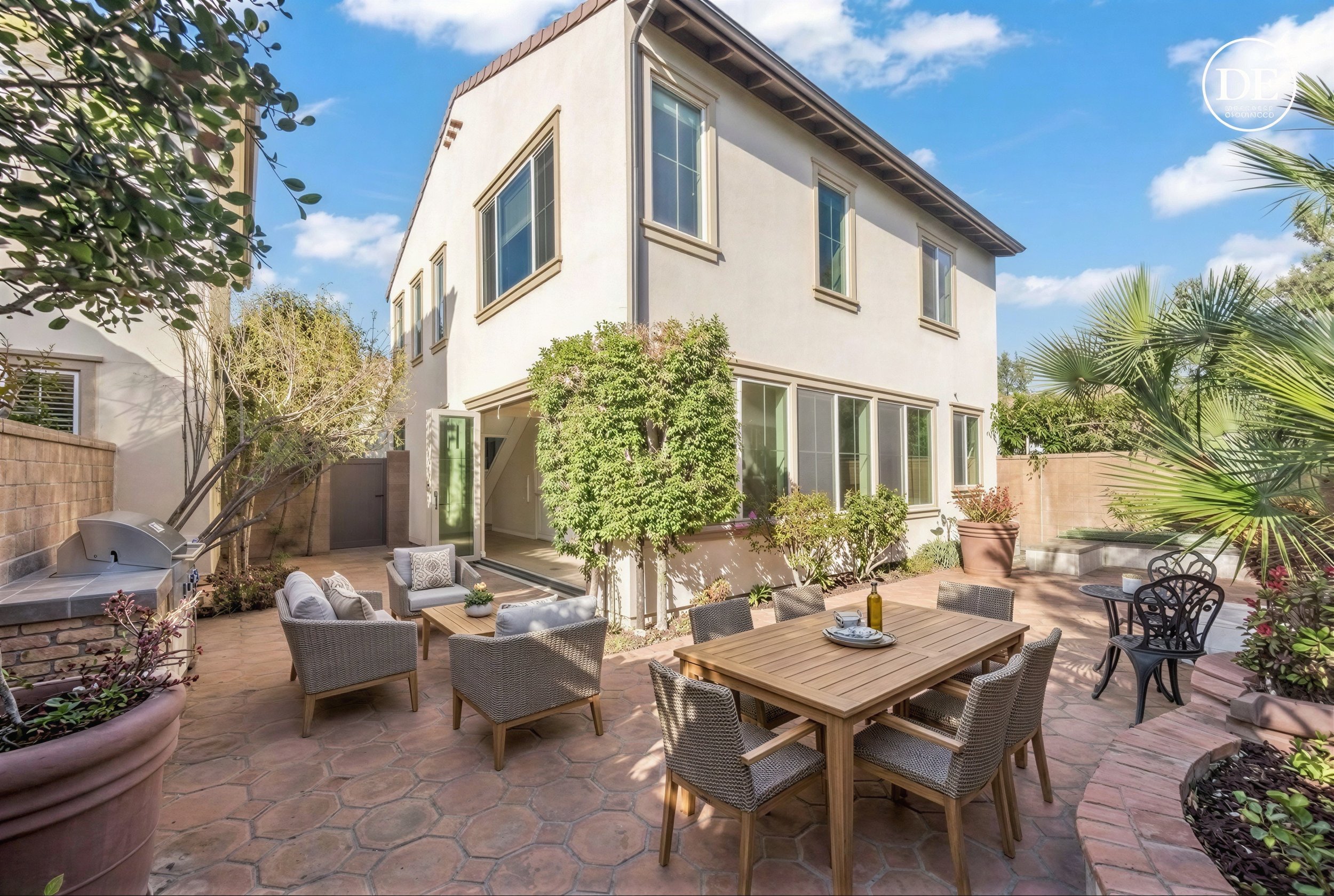
One feature that stood out immediately was the backyard.
No rear neighbor.
A built-in BBQ.
A fountain.
A sense of separation from surrounding homes.
These elements may seem secondary during a quick showing.
But they often become some of the most appreciated features after move-in.
Privacy is difficult to create after the fact.
You can renovate a kitchen.
You can replace flooring.
You can repaint walls.
You cannot easily change the positioning of neighboring homes.
As communities become denser, privacy becomes increasingly valuable.
For many residents, the backyard becomes an extension of the living space.
It's where people relax after work.
Entertain friends.
Enjoy quiet mornings.
Or simply take a break from screens and schedules.
That experience matters.
Why Former Model Homes Often Age Well
This property also illustrates another interesting phenomenon.
Many buyers dismiss older homes in favor of newer inventory.
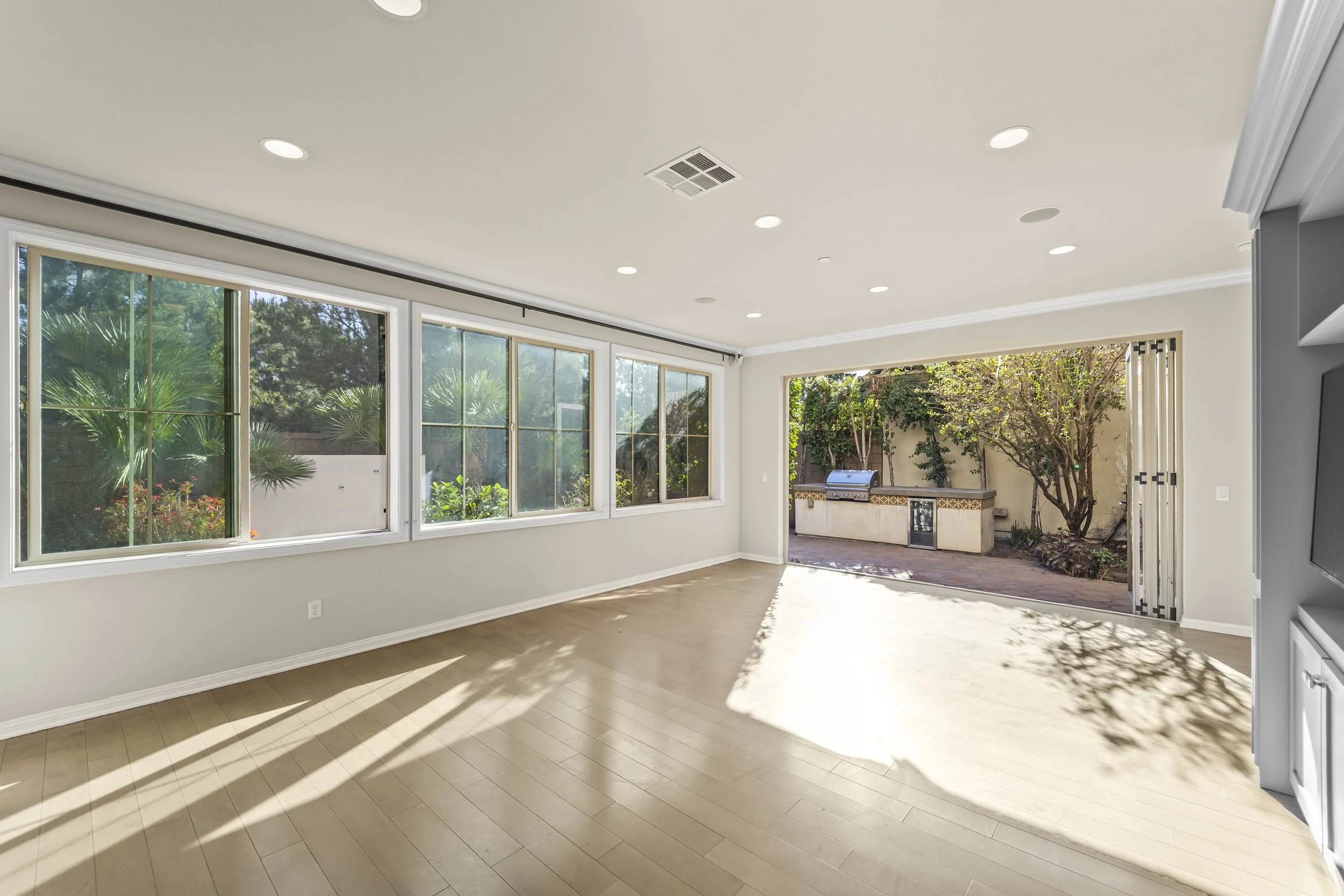
Yet former model homes often contain features that would be expensive to replicate today.
Builders frequently invest additional resources into:
Landscaping
Hardscaping
Built-in features
Decorative upgrades
Outdoor entertainment areas
The goal is to create an emotional connection with prospective buyers.
Years later, those investments can continue delivering value.
In some cases, they create a level of functionality and finish that would cost tens of thousands of dollars to reproduce.
Why Someone Would Pay $5,500 Per Month
When discussing this lease, the question naturally arises:
Why would someone pay $5,500 per month for this home?
The answer is not simply square footage.
It is not simply bedrooms.
It is not simply the Irvine address.
People pay premium rents because they are purchasing a lifestyle.
In this case, the tenant received:
Irvine schools
Portola Springs amenities
Solar energy savings
Private outdoor space
A highly functional layout
A desirable neighborhood environment
The rent reflects the overall package.
Not any single feature.
That's an important distinction.
Real estate value is almost always created by combinations of factors rather than one headline feature.
The Danger of Chasing Trends
One of the biggest mistakes I see in real estate is confusing popularity with value.
When a new phase opens, excitement naturally follows.
People tour model homes.
Builders market heavily.
Social media highlights the newest products.
Attention concentrates in one place.
But attention and value are not always the same thing.
Sometimes the most rational decision involves looking at areas that receive less attention.
The goal should never be:
"What's the newest home available?"
The goal should be:
"Which home best supports the lifestyle I want?"
Those are very different questions.
A Better Framework for Evaluating Irvine Homes
Whether you're buying or leasing, I encourage clients to evaluate homes using a broader framework.
Instead of asking:
Is it new?
Consider asking:
How efficient is daily life?
How practical is the floor plan?
How much privacy do I have?
How convenient is the location?
How much value am I receiving relative to the premium I'm paying?
Will I still appreciate these features five years from now?
These questions often lead to better decisions.
Final Thoughts
Real estate is full of assumptions.
One of the most common assumptions is that newer automatically means better.
Sometimes that's true.
Sometimes it isn't.
The former model home featured in my Portola Springs video serves as a reminder that value often exists where people aren't looking.
While many buyers focus on the newest phases climbing the hillsides, established areas may offer their own advantages:
Better privacy
Improved accessibility
Mature surroundings
Functional upgrades
Strong lifestyle efficiency
The smartest real estate decisions usually come from understanding trade-offs rather than chasing trends.
Because in the end, the best home isn't necessarily the newest one.
It's the one that helps you live better every day.
Watch the Full Video
In the video below, I walk through this former builder model home in Portola Springs and discuss the concept of geographic arbitrage, layout efficiency, privacy, and why some of Irvine's most overlooked opportunities may not be in the newest phases of a community.
Watch here:
Related Articles
Know the home. Elevate the value.
Phone: (714) 902-3135
Email: myhome@zengrealestate.com