Ask Real Estate - Why Some Orange County Homes Don’t Sell — Even in a Good Market
Why Some Orange County Homes Don’t Sell — Even in a Good Market
It’s Usually Not the Market. It’s the Positioning.
Email: myhome@zengrealestate.com
Updated April 2026
A homeowner reached out to me recently with a question that sounded simple, but carried a lot of frustration.
"We listed our home two months ago. There were some showings at the beginning, but now it’s quiet. Other homes in the area are selling. Why isn’t ours?"
On paper, nothing seemed obviously wrong.
The home was in a desirable Orange County neighborhood.
The price wasn’t dramatically out of range.
The market, while shifting, was still active.
But the result was clear:
👉 The home wasn’t selling.
This situation is more common than most people think.
And it often leads to a natural assumption:
👉 “Maybe the market is slow.”
But in many cases, that’s not the real reason.
Because even in a market where:
inventory is gradually increasing
buyers are becoming more selective
and conditions are less aggressive than before
👉 well-positioned homes are still selling — and sometimes selling very well.
So when a home doesn’t sell, the more useful question is not:
👉 “What’s happening with the market?”
But rather:
👉 “How is this home positioned within the market?”
The Reality: Homes Don’t Fail Randomly
One of the biggest misconceptions in real estate is that outcomes are unpredictable.
They’re not.
In most cases, when a home sits on the market, it’s not because:
the home is “bad”
the market is “broken”
or buyers have disappeared
It’s because something in the positioning is misaligned.
And positioning is not one thing.
It’s the combination of:
pricing
preparation
presentation
timing
and exposure
When these elements work together, homes sell.
When they don’t, even good homes can struggle.
Reason 1: Priced “Correctly,” But Positioned Wrong
Many sellers believe that as long as the price is “close enough,” the home should sell.
But pricing is not just about accuracy.
It’s about how the home enters the market relative to its competition.
For example:
A home listed at $1.85M may seem reasonable based on recent sales.
But if:
competing homes are better prepared
or priced more strategically
or positioned to create more urgency
Then that same $1.85M listing may feel:
👉 less compelling
to buyers.
In today’s market, buyers are not just asking:
👉 “Is this fairly priced?”
They’re asking:
👉 “Is this the best option available right now?”
And if the answer is no, they move on.
Reason 2: Competing Against Better-Prepared Homes
Buyers rarely evaluate homes in isolation.
They compare.
And often, the difference between:
a home that sells quickly
and a home that lingers
is not the absolute quality of the home, but the relative experience.
For example:
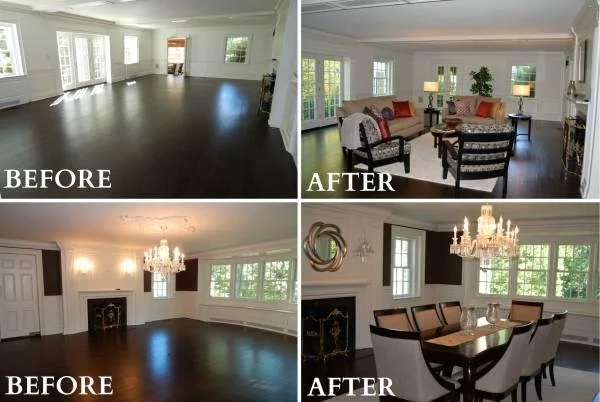
Two homes may have:
similar layouts
similar size
similar price
But one is:
professionally staged
well-lit
clean and updated
thoughtfully presented
While the other is:
partially prepared
less visually appealing
harder to imagine living in
The result?
👉 Buyers assign different values — even if the data is similar.
Preparation is not cosmetic.
It’s strategic.
It directly impacts:
perceived value
emotional response
willingness to act

Reason 3: Missing the Initial Launch Window
The first 7–10 days on the market are critical.
This is when your home receives:
the most attention
the highest number of views
the strongest potential for momentum
If a home enters the market:
slightly overpriced
underprepared
or without a clear strategy
It may miss that initial window.
And once that happens, something subtle but important changes:
👉 Buyer perception
Instead of:
👉 “This is new — I should act quickly”
It becomes:
👉 “This has been sitting — I can wait”
From there, the listing often enters a slower cycle:
fewer showings
reduced urgency
eventual price adjustments
And even after a price reduction, the momentum is harder to rebuild.
Reason 4: Weak Exposure Strategy
Many sellers assume that listing on the MLS is enough.
But in reality:
👉 not all exposure is equal
A strong listing strategy is not just about being “available.”
It’s about being:
visible
compelling
and differentiated
This includes:
high-quality photography
clear and intentional messaging
targeted marketing
and a coordinated launch
Without this, even a good home can feel:
👉 invisible in a crowded market
In a more competitive environment, exposure is not optional.
It’s a key driver of results.
Reason 5: Ignoring Buyer Psychology
This is one of the most overlooked factors — and one of the most important.
Buyers do not make decisions based purely on logic.
They respond to:
how a home feels
how it compares to others
how urgent the opportunity seems
For example:
A home that is:
priced to encourage activity
presented clearly
and positioned as a strong option
can create:
👉 competition
Which leads to:
stronger offers
faster timelines
better outcomes
Meanwhile, a home that feels:
uncertain
average
or “still available later”
creates the opposite effect.
👉 Buyers wait. Or they move on.
What Successful Listings Do Differently
When you look at homes that sell quickly — even in a shifting market — a pattern emerges.
They are not random successes.
They are:
👉 well-positioned from the beginning
1. They Enter the Market with a Clear Strategy
Pricing is intentional
Preparation is complete
Presentation is aligned with the target buyer
2. They Create Early Momentum
Strong first impression
Immediate interest
Sense of urgency
3. They Compete Effectively
They don’t just exist in the market.
They stand out within it.
4. They Align Data with Perception
The numbers make sense —
but so does the experience.
The Market Is Not the Problem
It’s easy to blame the market.
And sometimes, conditions do play a role.
But in most cases:
👉 the market is selective, not inactive
From recent Orange County trends, we’re already seeing:
inventory gradually increasing
buyers becoming more thoughtful
well-prepared homes continuing to perform
This creates a clear divide:
👉 between homes that are strategically positioned and homes that are simply listed
A Better Way to Think About Selling
Instead of asking:
👉 “Will my home sell?”
A more useful question is:
👉 “How should my home be positioned to succeed?”
Because selling is not just about:
putting a home on the market
and waiting for offers
It’s about:
👉 designing the conditions for a strong result
Final Thoughts
When a home doesn’t sell, it’s rarely because something is fundamentally wrong.
More often, it’s because:
👉 the home is not positioned to compete effectively
And the good news is:
👉 positioning can be adjusted
With the right strategy, many listings can be:
reintroduced
re-evaluated
and repositioned
to achieve a better outcome.
If you’re considering selling — or if your home has been on the market and you’re not seeing the results you expected — it may be worth looking beyond the market itself and focusing on how the home is being positioned within it.
Know the home. Elevate the value.
Phone: (714) 902-3135
Email: myhome@zengrealestate.com