Ask Real Estate - Portola Springs, Irvine: Who This Neighborhood Is Really For

Portola Springs, Irvine: Who This Neighborhood Is Really For
Email: myhome@zengrealestate.com
Portola Springs is often grouped together with Irvine’s newer master-planned communities, yet buyers who choose this neighborhood usually do so for reasons that are quite different from why they choose other parts of the city.
This article isn’t about rankings, price comparisons, or which Irvine neighborhood is “best.”
Instead, it takes a decision-focused look at who Portola Springs actually works for—and who it doesn’t.
Understanding that distinction matters more than labels.
Where Portola Springs Sits — Geography Before Branding
Portola Springs is located in the northernmost part of Irvine, bordered by open hills and adjacent to the 241 toll road. Unlike Irvine neighborhoods that sit closer to the city’s commercial or institutional centers, Portola Springs occupies the physical edge of the city.
This location shapes daily life in subtle but meaningful ways:
The neighborhood feels quieter and more residential, particularly away from major arterial roads
Access to open space and trail systems is a defining feature
Commute patterns tend to skew northward, toward North Orange County or Los Angeles County
Rather than being embedded within Irvine’s internal circulation, Portola Springs functions more as a residential endpoint. For some buyers, that’s a limitation. For others, it’s the appeal.
Why Portola Springs Is Often Grouped With Other Newer Communities
In many discussions—especially among out-of-area or international buyers—Portola Springs is mentioned alongside other newer Irvine communities such as Woodbury, Orchard Hills, and Stonegate.
That grouping makes sense on a surface level. These neighborhoods share several characteristics:
Master-planned development
Homeowners associations (HOAs)
Newer construction relative to Irvine’s older areas
A consistent architectural and community framework
But while these similarities explain why the communities are often discussed together, they don’t fully explain how buyers experience them differently.
Treating all newer Irvine communities as interchangeable can obscure the trade-offs that matter most to day-to-day living.
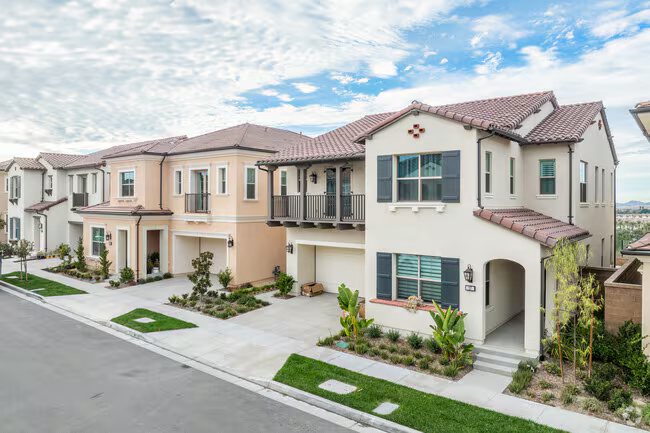
Who Typically Chooses Portola Springs
Buyers who choose Portola Springs often share a specific set of priorities.
They tend to value:
A quieter residential environment over proximity to retail or dining
Access to open space, trails, and surrounding hills
A sense of separation from busier commercial corridors
These buyers are generally comfortable with the idea that daily errands may require a short drive, and that neighborhood life centers more on home, outdoor space, and internal community amenities rather than walkable destinations.
Just as importantly, Portola Springs may not be the best fit for buyers who:
Prioritize walkability to shops or restaurants
Prefer being near major employment hubs within Irvine
Want a more urban or activity-oriented environment
In this sense, Portola Springs is less about compromise and more about intentional choice.
Housing Types and Community Layout
Portola Springs includes a mix of townhomes and single-family homes, with noticeable variation across different phases of development.
Earlier phases tend to feature:
Slightly larger lot sizes
More variation in street layout
A more gradual integration with surrounding hills
Later phases reflect:
More efficient land use
Higher density in certain sections
A layout optimized for newer construction standards
Across the community, elevation changes and proximity to open space influence how homes feel, even within similar floor plans. Two properties with comparable square footage can offer very different living experiences depending on location within the neighborhood.
This internal variation is one reason Portola Springs is often better understood at the street level rather than the headline level.
HOA and Mello-Roos: Why Portola Springs Is Often Misunderstood
HOA fees and Mello-Roos assessments are common topics of discussion when Portola Springs comes up—and frequently, they’re discussed without context.
In Portola Springs, these costs generally support:
Community infrastructure and maintenance
Shared amenities and landscaping
Long-term planning for public facilities
What’s often overlooked is that these fees are not unique to Portola Springs, nor are they inherently positive or negative. Their relevance depends on how a buyer evaluates:
Predictability versus flexibility
Shared maintenance versus individual responsibility
Long-term cost structure relative to lifestyle preferences
Rather than asking whether HOA or Mello-Roos is “worth it,” a more useful question is whether the overall framework aligns with how a household expects to live.
Portola Springs Compared to Other Newer Irvine Communities
Without ranking neighborhoods, it’s helpful to understand how Portola Springs differs in character from other newer Irvine areas:
Portola Springs emphasizes quiet, open space, and separation from commercial density
Woodbury prioritizes centrality and proximity to retail and daily conveniences
Orchard Hills offers elevation, views, and a more exclusive feel
Stonegate sits between these extremes, balancing access and residential calm
These differences don’t suggest hierarchy. They reflect distinct design philosophies and attract different buyer profiles.
Why Portola Springs Is Being Re-Evaluated Now
In a market where buyers are no longer rushing to secure any available home, neighborhood fit has taken on greater importance.
As decision-making becomes more deliberate, buyers are paying closer attention to:
How a neighborhood supports their daily routines
What trade-offs they are consciously making
Whether a community aligns with long-term expectations, not just short-term trends
In that context, neighborhoods like Portola Springs—clear in their identity and consistent in experience—are often re-evaluated more thoughtfully.
A Neighborhood That Works Best When Expectations Are Clear
Portola Springs is not designed to appeal to everyone, and that is precisely why it works well for certain buyers.
For households who value quiet, open space, and a residential environment at the edge of Irvine, it offers consistency and clarity. For those seeking walkability, centrality, or a more active setting, other parts of the city may be a better match.
Portola Springs tends to work best for buyers who know what they want—and are comfortable with what they are choosing not to prioritize.
That alignment, more than rankings or reputation, is what ultimately defines a good decision.
Phone: (714) 902-3135
Email: myhome@zengrealestate.com