Ask Real Estate - Newer Energy-Efficient Homes vs. Older Construction
Newer Energy-Efficient Homes vs. Older Construction
What Buyers Should Know Before Making a Decision
Email: myhome@zengrealestate.com
Many buyers focus on layout, finishes, and location when evaluating a home. While those factors matter, energy efficiency plays a major role in everyday comfort, monthly operating costs, and long-term ownership value.
This page explains how newer energy-efficient homes differ from older construction, what those differences mean in real life, and why energy performance has become an increasingly important consideration for today’s buyers.
What Does “Energy-Efficient” Really Mean?
Energy efficiency is not a single feature. It is the result of how a home is designed, built, and equipped as a system.
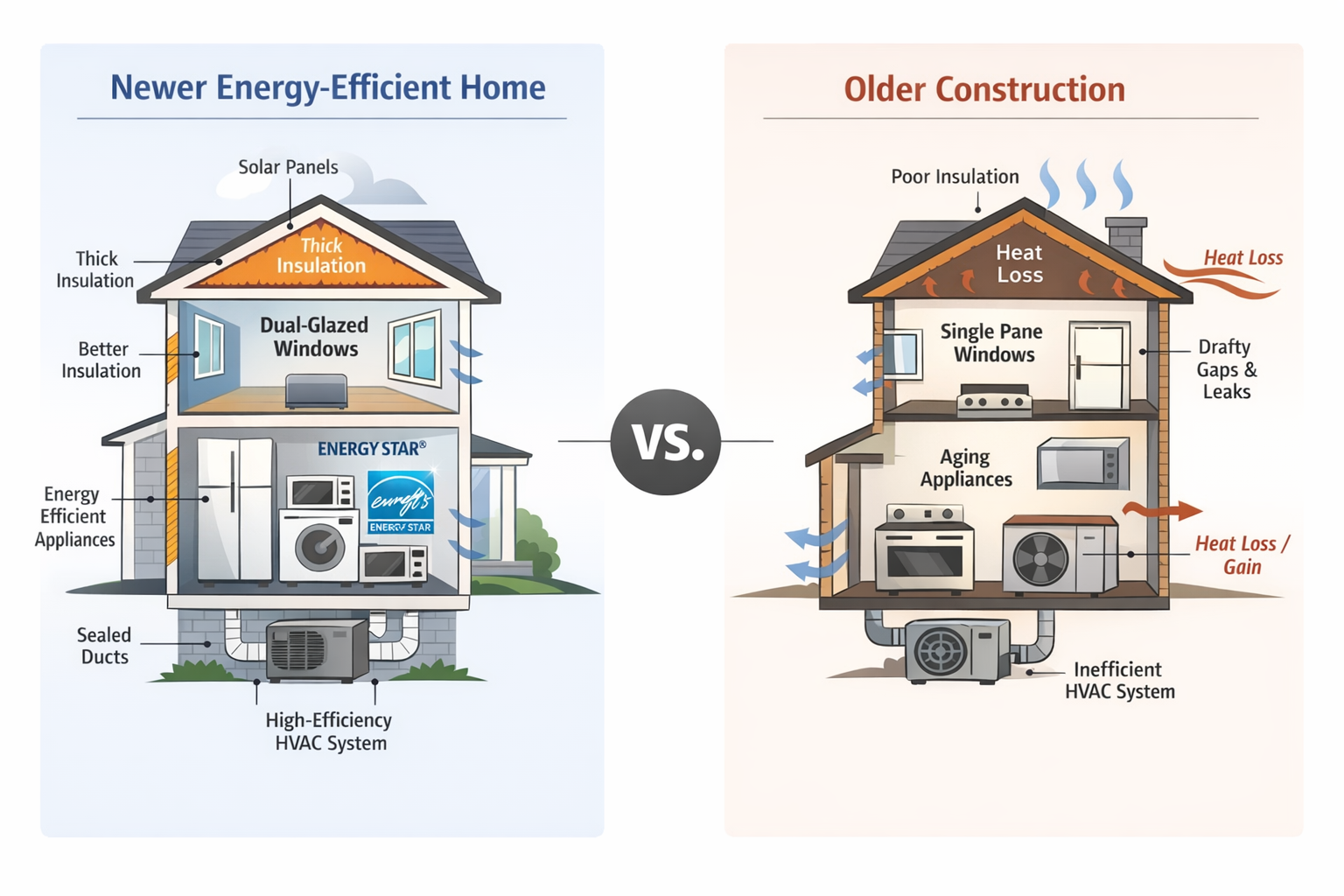
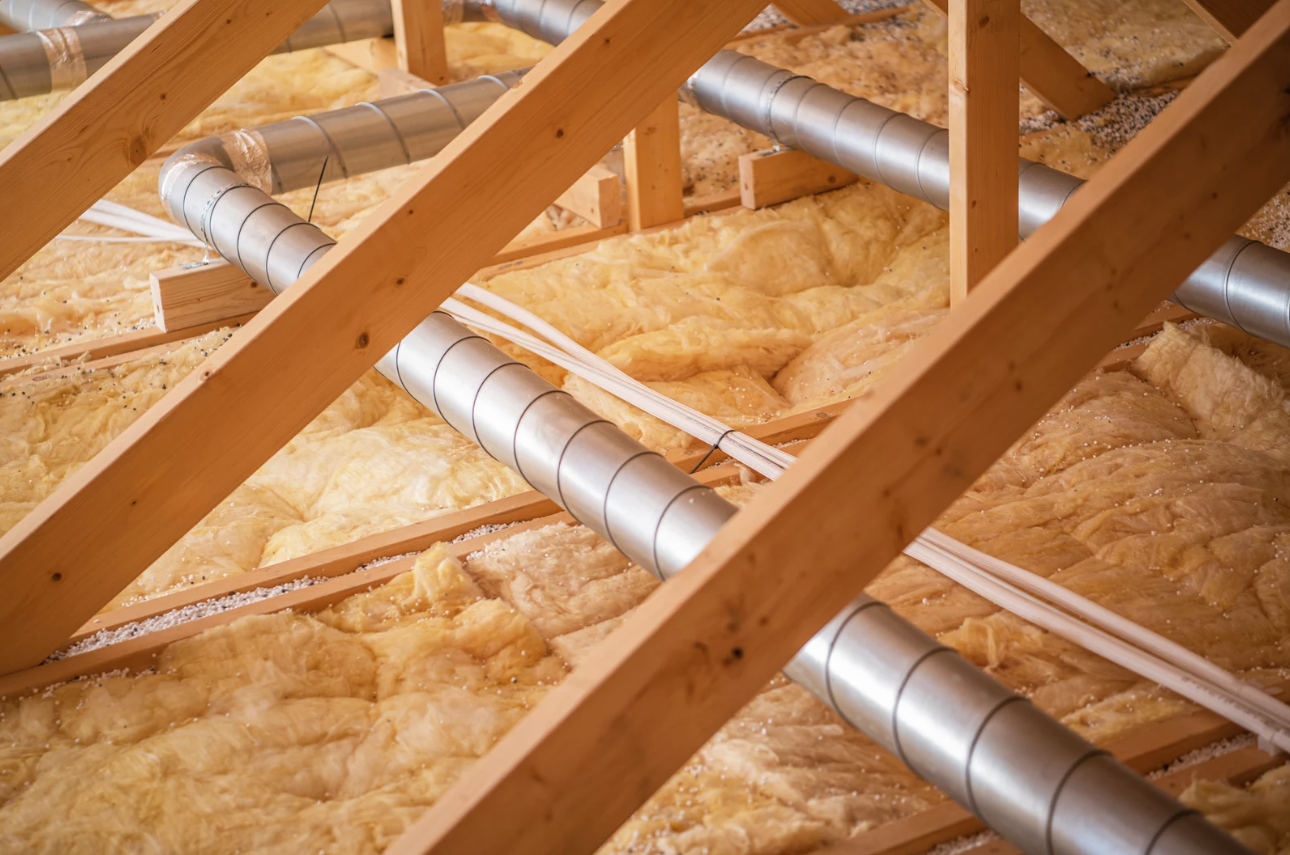
In energy-efficient homes, construction standards, insulation, windows, appliances, and heating and cooling systems are designed to work together to:
Reduce energy loss
Maintain more consistent indoor temperatures
Lower overall energy usage
The goal is not just lower utility bills, but a more comfortable and predictable living environment.
Title 24: California’s Energy Efficiency Standard Explained
California’s Title 24 Building Energy Efficiency Standards are among the most stringent in the country. Homes built under these standards are required to meet specific performance benchmarks for insulation, windows, mechanical systems, and energy usage.
What this means for buyers:
Homes are built to reduce unnecessary heat gain and loss
Construction standards are higher than those of older homes
Energy efficiency is integrated into the structure, not added later
In practical terms, Title 24 compliance affects how the home performs every day — not just how it looks.
Appliances, Windows, and HVAC: A System, Not Separate Parts
ENERGY STAR® Rated Appliances
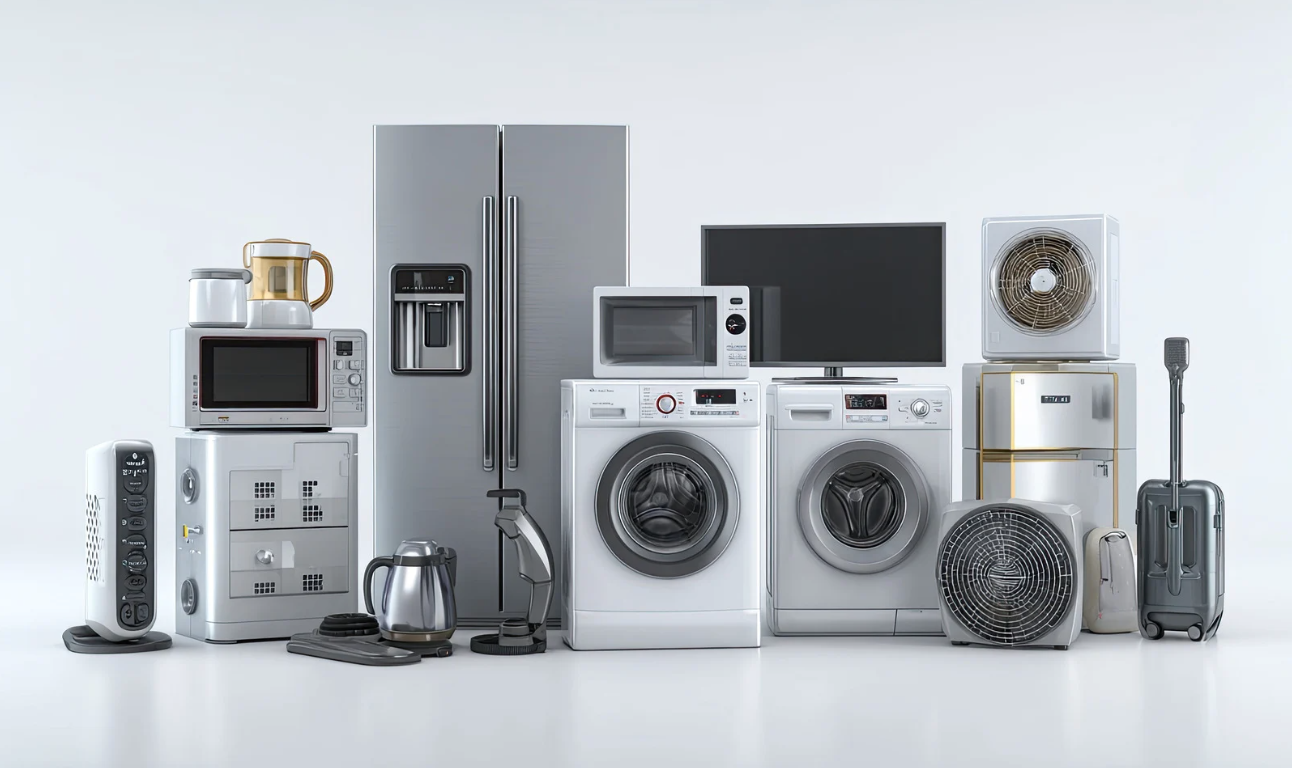
Energy-efficient homes often include ENERGY STAR® rated appliances, which meet strict federal guidelines for energy and water efficiency. These appliances are designed to deliver reliable performance while using fewer resources over time.
Dual-Glazed Windows with UV Coating
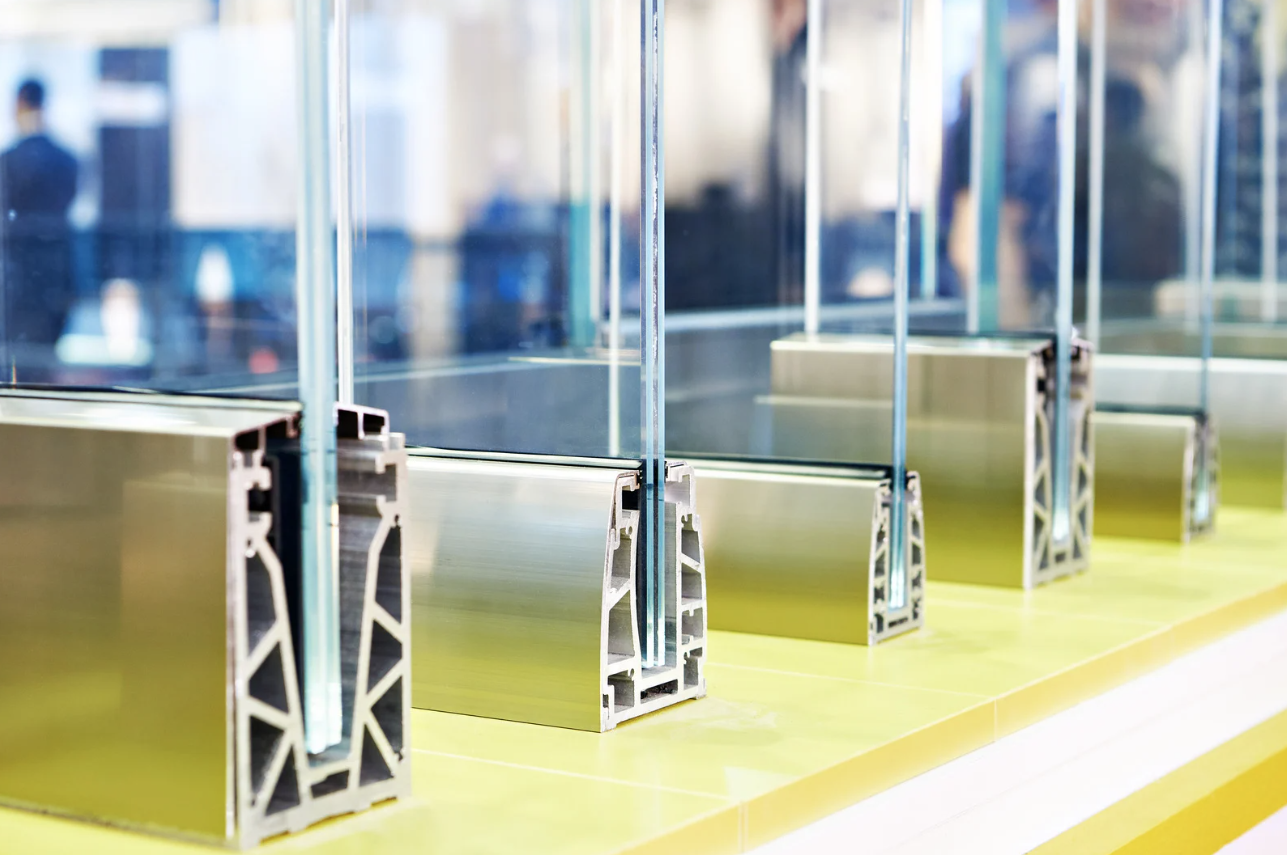
Modern energy-efficient homes typically use dual-glazed windows with ultraviolet (UV) coating, which help:
Keep interiors cooler in summer and warmer in winter
Reduce temperature fluctuations
Protect flooring and furnishings from sun damage
Energy-Efficient Heating and Cooling Systems
High-efficiency HVAC systems are designed to work in coordination with insulation and window performance. This results in:
More consistent temperatures
Faster heating and cooling response
Reduced strain on mechanical components
Together, these elements form an integrated system that supports comfort and efficiency.
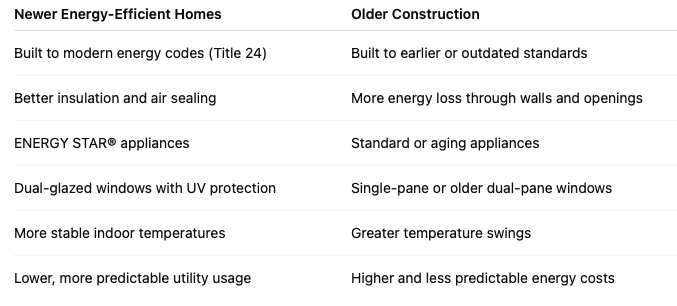
Newer Energy-Efficient Homes vs. Older Construction
What Buyers Often Underestimate
Many buyers do not immediately see the impact of energy efficiency during a short showing. However, over time, it can influence:
Daily comfort across seasons
Monthly operating costs
Future upgrade needs
Resale appeal, especially as buyers become more energy-conscious
Energy efficiency is not always visible, but it is experienced every day.
How This Applies to Homes Like This One
Homes built in recent years often incorporate:
Title 24–compliant construction
Energy-efficient appliances and systems
Modern window technology
Thoughtful integration of mechanical and structural performance
These features are designed to support long-term ownership with fewer compromises between comfort, efficiency, and functionality.
Why This Matters in the Long Run
Choosing a home is not only about today’s lifestyle — it is also about how the home performs over time. Energy-efficient construction can contribute to:
A more comfortable living environment
Reduced long-term operating costs
Fewer immediate upgrades
Broader appeal to future buyers
Understanding these differences allows buyers to make more informed, confident decisions.
Phone: (714) 902-3135
Email: myhome@zengrealestate.com